

The Silent Crisis of NEET and JEE Droppers in India


The Silent Crisis of NEET and JEE Droppers in India
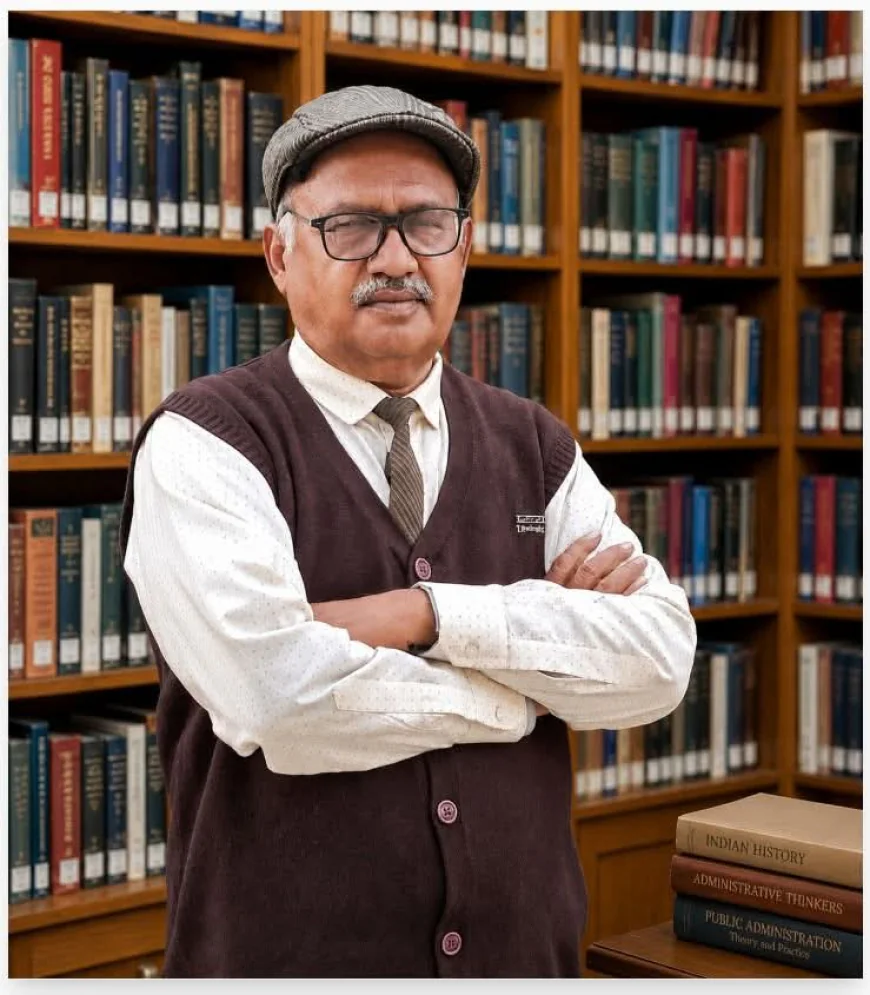
Dr Vijay Garg
Why in the End 90% of Kids Who Take a Drop After NEET-UG and JEE-Main Almost End Up in the Same Place
Dr Vijay Garg (Not Every Drop Year Changes Life: The Untold Story of Aspirants)
Every year in India, lakhs of students appear for competitive entrance exams like NEET-UG and JEE-Main. For many, the result becomes a turning point. Some celebrate success, while countless others face disappointment. In this emotional moment, one sentence echoes in homes, coaching centers, and relatives’ conversations: Choosing to drop is often romanticized as a heroic tale of grit and redemption. Coaching institutes plaster billboards with the faces of "droppers turned toppers." However, data and academic realities tell a much starker story.
Statistics show that nearly 90% of drop-year students end up with almost the exact same percentile, score, or college tier as their first attempt. Why does a year of absolute freedom and dedicated time yield the same results for the vast majority? The answers lie in psychology, habit formation, and structural flaws in how students approach their gap year. ## 1. The Myth of "More Time" The primary reason students take a drop is the belief that they just lacked time during their first attempt due to board exams and school practicals. While true on paper,
having 24 hours a day with zero external structure is a double-edged sword. Without the daily routine of school, many students struggle with time management. The sudden influx of unstructured time leads to: * **Procrastination:** Believing that "exams are a year away," leading to a slow start in the first few months. * **Burnout:** Attempting to study 14 hours a day right from June, only to completely lose steam by November when the actual revision phase begins. ## 2. Relitigating Instead of Rebuilding Most droppers do not need to learn *new* concepts; they need to fix their existing weaknesses. However,
the human brain inherently resists discomfort. When a drop year starts, students often re-watch the same video lectures, highlight the same textbooks, and solve the same basic problems they did the year before. This creates an **illusion of competence**. They confuse familiarity with mastery. Because they "know" the chapter, they skip the grueling process of deep practice, only to fail at the exact same tricky conceptual questions in the actual exam. ## 3. The Psychological Weight of the "Last Chance" During the first attempt, students have a safety net—they are simultaneously clearing their high school boards.
In a drop year, that safety net is gone. As the exam months (January for JEE, May for NEET) approach, the psychological pressure multiplies exponentially. * **Isolation:** While their peers are posting photos of college fests and hostel life on social media, droppers are confined to their rooms or coaching cubicles. * **Performance Anxiety:** The fear of "wasting a year" and facing society becomes a massive cognitive burden. On exam day, this anxiety often triggers panic, leading to silly mistakes and a drop in performance, landing them right back at their previous year's score level.
## 4. Treating the Symptom, Not the Disease If a student got a low score in their first attempt because of deep-seated habits—like avoiding mock tests, escaping difficult subjects (e.g., Physics for NEET aspirants), or an addiction to smartphones—simply changing the calendar year will not change the outcome. A drop year only works if there is a radical transformation in behavior. If the underlying study habits, sleep cycles, and discipline issues remain untreated, the student simply repeats the exact same cycle, yielding the exact same result.
## Breaking the 90% Statistic The 10% of droppers who *do* make it to the IITs and top AIIMS units do not succeed because they studied harder; they succeed because they studied differently. They treat the drop year as a diagnostic mission: 1. **Ruthless Analysis:** They spend the first week analyzing exactly why they failed the first time and target those specific weak areas. 2. **Mock Test Obsession:** Instead of running away from evaluation, they take tests constantly, using them to build stamina against exam-day panic. 3. **Mental Resilience:** They actively manage their mental health, maintain a strict routine, and cut out social media entirely.
## The Bottom Line Taking a drop year for JEE or NEET is not a guarantee of success; it is merely a second chance to fix first-time mistakes. If a student enters a drop year with the same mindset and habits they had in Class 12, the universe rarely rewards them with a different outcome. Time alone does not crack these exams—structural change does. Students leave colleges, lock themselves in rooms, shift to Kota, Delhi, Hyderabad, Chandigarh, or join online coaching. Parents invest lakhs of rupees. Dreams become larger. Expectations become heavier. But by the end of that year, reality shocks most families. A huge number of droppers either: score only slightly better, remain at nearly the same rank, become mentally exhausted, or finally settle for colleges they could have joined one year earlier. That is why many education experts quietly admit a painful truth:
“Most droppers don’t fail because they are weak students. They fail because a drop year changes very little fundamentally.” Studies and coaching reports show that repeaters form a massive portion of NEET and JEE aspirants every year. Nearly half of NEET applicants are repeaters, while a very large share of JEE candidates are also droppers. The bigger question is not: “Can a dropper succeed?” The real question is: “Why do so many remain stuck despite giving one full extra year?” The Great Illusion of “One More Year” Most students believe time alone creates success. They think: “I already know the syllabus.” “Now I have no school pressure.”
“This year I will study seriously.” “I only missed by a few marks.” But competitive exams are not only about time. They are about: discipline, emotional stability, consistency, strategy, test temperament, memory retention, and mental endurance. A student who could not study consistently for two years often struggles to suddenly study 10–12 hours daily for another isolated year. The syllabus remains the same. The competition becomes tougher. But the student’s habits often remain unchanged. That is why many droppers unknowingly repeat the same mistakes with greater pressure. The Psychological Trap of a Drop Year A drop year initially feels powerful. For the first few weeks: motivation is high, new books are purchased, fresh schedules are created,
coaching institutes promise miracles, parents become hopeful again. But slowly reality begins to appear. Friends move into colleges. Social media shows hostel life, fresher parties, new campuses, internships, and independence. Meanwhile the dropper remains trapped in: mock tests, rankings, revision cycles, and constant comparison. Many students begin feeling isolated. Reddit discussions by droppers frequently reveal emotional exhaustion, fear, burnout, loneliness, and guilt. Some students improve massively. But many mentally collapse before the exam even arrives. The drop year becomes less about academics and more about survival. Coaching Industry Sells Hope — Not Guarantees India’s coaching economy depends heavily on droppers. Special “dropper batches” are marketed as second chances. Advertisements show: AIR rankers, dramatic success stories, “400 to 650 marks” transformations, L and motivational speeches. But advertisements rarely show: students who stayed average, students who lost confidence, students who became depressed,
or students who wasted two or three years chasing one exam. The coaching industry highlights exceptional outcomes because exceptional stories sell. But average outcomes remain hidden. The truth is simple: One year of coaching cannot automatically fix: weak basics, poor concentration, procrastination, anxiety, burnout, or lack of genuine interest. Many Students Don’t Actually Change Their Method This is perhaps the biggest reason. A large number of droppers simply repeat: the same notes, the same coaching style, the same passive learning, and the same mistakes. They study more hours but not more effectively. For example: students reread theory without solving questions, memorize instead of understanding, avoid mock analysis, ignore weak subjects, study emotionally instead of strategically.
The result? The score increases only slightly. A student scoring 420 in NEET may reach 470. A JEE student at 88 percentile may reach 91 percentile. But in India’s extreme competition, small improvements often change nothing. Competition Becomes Harder Every Year This is another brutal reality many students underestimate. Every year: new toppers arrive, fresh students join with stronger preparation, online resources improve, exam patterns evolve, and cutoff levels shift unpredictably. A dropper is not competing against their old self. They are competing against millions of new aspirants. NEET especially has become extraordinarily competitive due to limited government MBBS seats compared to the huge applicant pool. Similarly, JEE-Main now has intense percentile battles where even tiny mistakes drastically affect ranks.
So even if a dropper improves personally, the national competition may improve faster. Burnout Is Real — But Ignored Parents often say: “You only have one job — study.” But the human brain is not a machine. After: two years of Class 11 and 12 pressure, coaching stress, board exams, competitive exams, family expectations, many students are already mentally exhausted before the drop year even begins. Another full year of repetitive preparation becomes emotionally dangerous for some students. Educational articles increasingly warn about: anxiety, depression, isolation, sleep problems, low self-esteem, and emotional breakdowns during drop years. Yet Indian society often treats mental fatigue as laziness.
That misunderstanding destroys many students silently. Some Students Never Wanted NEET or JEE in the First Place This is a hidden truth inside Indian households. Many students preparing for NEET or JEE are actually interested in: design, business, law, writing, filmmaking, psychology, coding, animation, sports, or entrepreneurship. But family pressure pushes them into engineering or medicine. When such students take a drop year, motivation naturally collapses. You cannot force passion for an exam through pressure alone. Some Reddit users openly described pretending to study while emotionally disconnected from the goal itself.
This creates guilt, lying, fear, and emotional conflict inside families. Social Pressure Turns the Drop Year Into “Do or Die” In India, a drop year often becomes emotionally extreme. Relatives ask: “Kitne marks aaye?” “Selection hua?” “Ab kya karega?” “Drop liya hai toh AIIMS ya IIT toh nikalna chahiye.” Suddenly the student feels: “This is my last chance.” That mindset becomes dangerous. Fear reduces performance. Overthinking destroys accuracy. Anxiety affects memory. Students begin studying not to learn — but to avoid humiliation. That emotional burden weakens concentration more than most people realize. The Harsh Mathematics of Success Suppose: 24 lakh students appear for NEET, but only a small fraction get top government seats. Even brilliant improvement may still not be enough. Similarly in JEE: lakhs compete, but elite IIT seats remain limited. This means millions of hardworking students mathematically cannot achieve their dream seats. That does not mean they are failures. It simply means India’s exam ecosystem is brutally narrow. Unfortunately, society interprets rank as intelligence. That is deeply unfair. Why Some Droppers Still Succeed Despite all this, some students genuinely transform during a drop year. Why? Because they:
identify their mistakes honestly, completely change their study method, become emotionally disciplined, reduce distractions, maintain consistency, and prepare with maturity. For such students, a drop year becomes a rebuilding year rather than a repeating year. But these cases are fewer than society imagines.
Success stories become viral. Average stories remain invisible. The Most Dangerous Outcome: Losing Self-Worth The worst thing about repeated exam failure is not losing a seat. It is losing belief in oneself. Many students begin thinking: “I am useless.” “Everyone moved ahead.” “I disappointed my parents.” “My life is over.” But exams are not life. A rank cannot measure: creativity, kindness, intelligence, leadership, resilience, communication, or future success. India has countless successful people who were: average students, failed aspirants, college dropouts, or ordinary rank holders. Life is always bigger than one entrance exam. India Must Rethink the Drop-Year Culture The real issue is not students taking drops. The real issue is the unhealthy belief that:
“Only NEET or IIT success guarantees respect.” This thinking is damaging an entire generation emotionally. Schools, parents, and society must begin teaching: career diversity, emotional health, skill development, practical learning, and alternative success pathways. Otherwise millions of teenagers will continue sacrificing: confidence, happiness, friendships, and mental peace for exams where success rates are mathematically tiny.
Conclusion In the end, many students who take a drop after NEET-UG or JEE-Main reach almost the same destination because: habits remain unchanged, pressure increases, competition becomes tougher, burnout grows, and emotional exhaustion silently destroys consistency. A drop year is not magical. It only works when: mindset changes, strategy changes, discipline changes, and emotional balance survives. Otherwise one extra year becomes merely: “the same race with heavier expectations.” And perhaps the biggest lesson India must learn is this: A student’s life should never become smaller than an exam.
What's Your Reaction?
 Like
0
Like
0
 Dislike
0
Dislike
0
 Love
0
Love
0
 Funny
0
Funny
0
 Wow
0
Wow
0
 Sad
0
Sad
0
 Angry
0
Angry
0

Surag Bureau पत्रकारिता के क्षेत्र में सक्रिय हैं और स्थानीय व राष्ट्रीय मुद्दों पर समाचार लेखन करते हैं। हमारा उद्देश्य पाठकों तक सटीक, निष्पक्ष और विश्वसनीय जानकारी पहुंचाना हैं।
















Comments (0)