

From Institution Builder to Life Mentor: Dr. Vijay Garg’s Journey
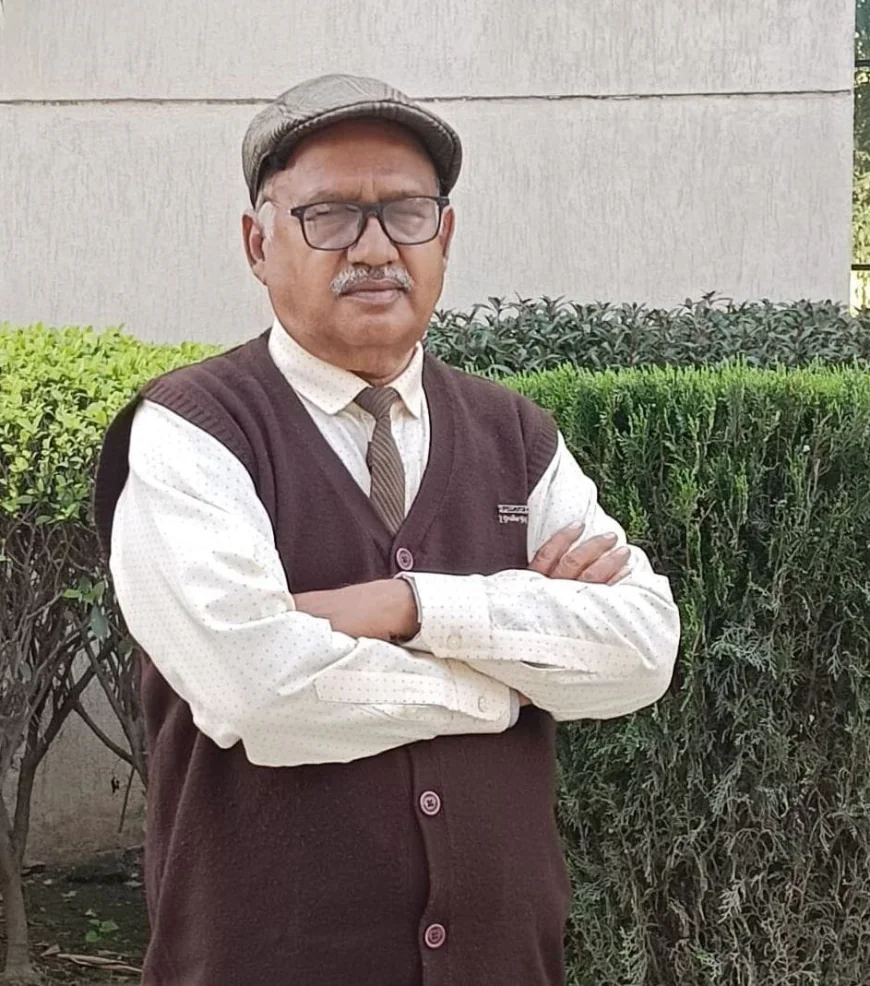


From Institution Builder to Life Mentor: Dr. Vijay Garg’s Journey
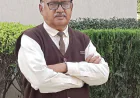
There are men who hold offices, and there are men who hold lives in their hands. Dr. Vijay Garg belonged, unquestionably, to the second kind. For nearly four decades, he stood at the helm of educational institutions, shaping not merely curricula and timetables, but the very character, ambition, and conscience of generations of young Indians who passed through his doors. To call Dr. Garg simply a "retired principal" would be an act of unforgivable understatement. He was a philosopher in a chalk-dusted coat, a reformer who worked not through protest but through patient example, and a scholar who never stopped learning even as he taught.
His life, examined closely, reads less like a career and more like a quiet revolution — carried out one classroom at a time. Dr. Vijay Garg was born into a family that regarded education not as a ladder of social mobility but as a sacred responsibility. From an early age, he absorbed the conviction that knowledge freely given is the greatest gift one generation can bestow upon another. His own schooling, modest in material resources but rich in intellectual rigour, planted in him a reverence for teachers that would one day circle back, transformed into his own vocation. He pursued his higher education with singular dedication, eventually earning his doctorate — an achievement that, for him, was never a title to display but a reminder of how much more there was still to understand.
His academic training sharpened him, but it was his temperament — patient, curious, and profoundly empathetic — that made him exceptional. "A good teacher does not merely transfer information — he awakens in the student the courage to ask the question that has no easy answer." When Dr. Garg assumed the position of Principal, he brought with him an uncommon philosophy: that the head of an institution must be the most committed learner within it. He arrived early, stayed late, and was known to walk the corridors long after others had gone home — not to police, but to think, to observe, and to quietly solve the problems that institutions accumulate like dust in corners. His administrative style was neither autocratic nor passive. He listened to teachers as peers, treated students as individuals of genuine worth, and insisted that a school's true measure was not its examination results but the quality of character it cultivated. Under his leadership, institutions flourished — not through grand announcements, but through the steady accumulation of small, considered improvements. Colleagues recall how he would remember the names of struggling students years after they had graduated, and how he would intercede quietly — a word here, an opportunity offered there — when a young person's path seemed to narrow. He was constitutionally incapable of indifference. Retirement, for Dr. Vijay Garg, was a change of address, not of occupation. He stepped down from formal administration but never from the life of the mind. In the years since leaving the principal's office, he has channelled his decades of observation and reflection into writing — contributing articles, essays, and commentary that appear regularly in newspapers and educational journals across India.
His writing is marked by the same qualities that defined his leadership: clarity of thought, warmth of expression, and an insistence on the practical and the ethical over the merely fashionable. He writes about education policy, the challenges facing contemporary youth, the importance of values in schooling, and the slow, irreplaceable work of building a civilised society through patient teaching. Readers frequently note that his prose reads like a conversation with someone who has seen much, judged little, and understood a great deal. He has also remained an active voice in public discourse on education reform, lending his credibility and experience to debates about curriculum design, teacher welfare, and the direction of Indian higher education — doing so not from ambition, but from a sense of duty that retirement simply could not extinguish. Life Beyond the Institution: Those who know Dr. Garg in his private life encounter a man of deceptively simple pleasures. He is an avid reader, with a particular fondness for history and philosophy. He walks daily — a discipline maintained across decades — and finds in that rhythm a space for the sustained reflection that his writing demands.
He is a devoted family man, and those who have seen him with his grandchildren report the same warmth, the same patience, the same genuine interest in the small person before him, that his students received. He is generous with his time in ways that cost him considerably. Younger educators seek him out for counsel; he gives it freely, without condescension or nostalgia. He does not pine for the past or disparage the present — a mark of genuine wisdom that is rarer than it appears. "Retirement has given me time to read everything I promised myself I would, and to realise how many more promises still await." The legacy of an educator is uniquely difficult to measure. It does not appear in quarterly reports or revenue figures. It manifests, slowly and often invisibly, in the choices made by former students decades after they have left the classroom — in the doctor who treats her patients with compassion, the engineer who refuses to cut corners, the ordinary citizen who votes thoughtfully and argues fairly. These are the products of good education, and they are Dr. Vijay Garg's true archive. Alumni who gathered to honour him in recent years spoke of specific moments — a single sentence he had said that had altered their course, a book he had pressed into their hands, a failure he had reframed as a necessary education. The specificity of these memories is telling. He was not a presence who washed over students and left them unchanged. He was, to borrow a word he himself would likely approve of, formative.
That so many of his former students have themselves entered teaching, medicine, law, and public service is not coincidence. It is consequence — the traceable echo of a man who believed, in every practical action of his life, that to educate is to participate in something larger than oneself Dr. Vijay Garg moves through his retirement with the unhurried confidence of a man at peace with his purpose. He has not put down his pen, nor quieted his curiosity, nor ceased to care about the young and the struggling. He has simply changed the room in which he does this work. And the work, as it always was, continues. India has produced many administrators of schools and colleges. It produces, less frequently, educators who transform the very idea of what a school can be.
Dr. Vijay Garg belongs to this rarer company — and the country is, in ways it may not fully reckon, considerably better for
What's Your Reaction?
 Like
0
Like
0
 Dislike
0
Dislike
0
 Love
0
Love
0
 Funny
0
Funny
0
 Wow
0
Wow
0
 Sad
0
Sad
0
 Angry
0
Angry
0

Surag Bureau पत्रकारिता के क्षेत्र में सक्रिय हैं और स्थानीय व राष्ट्रीय मुद्दों पर समाचार लेखन करते हैं। हमारा उद्देश्य पाठकों तक सटीक, निष्पक्ष और विश्वसनीय जानकारी पहुंचाना हैं।











Comments (0)